J+1
Selon Aristote, « L'homme est un animal politique », et tendrait par nature à vivre en cité, cette totalité sociale lui permettant d'accomplir les fins de sa nature. C'est par le discours, structurant la parole, les idées, la notion de bien et de mal, de juste et d'injuste et toutes les notions morales que l'homme est parvenu à organiser ses propres sentiments, rendant ainsi possible la vie en société.
Dans nos sociétés modernes, l'orchestration du discours et la médiatisation des événements du monde a pris une place centrale. Les médias, véritables caisses de résonance, jouent le rôle de transmetteur de l'information auprès du plus grand nombre. Les événements, politiques ou non, alimentent la machine médiatique, elle-même créatrice d'une nouvelle réalité devenue accessible pour le quidam. Ainsi médias et monde réel s'autoalimentent, se répondent, se confrontent en permanence pour donner naissance à une nouvelle lecture de notre quotidien.
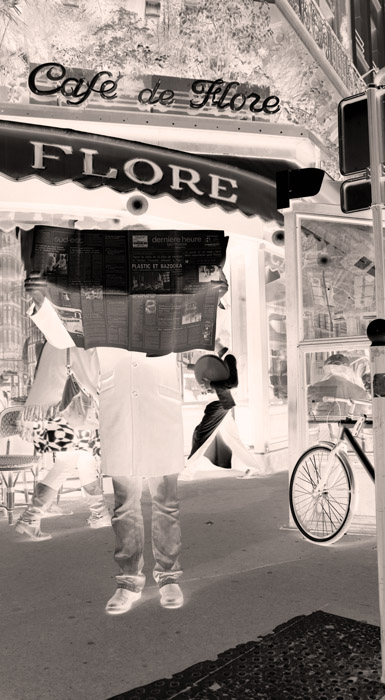
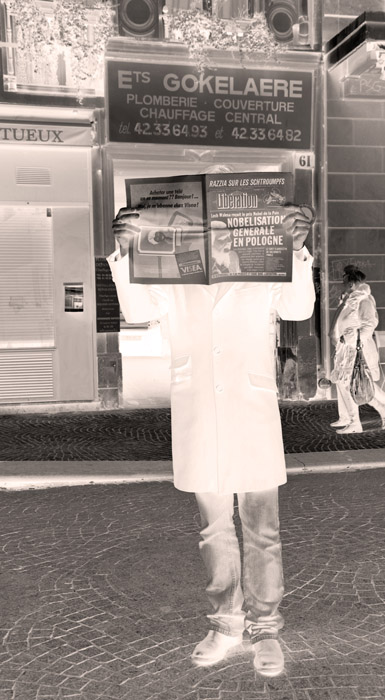
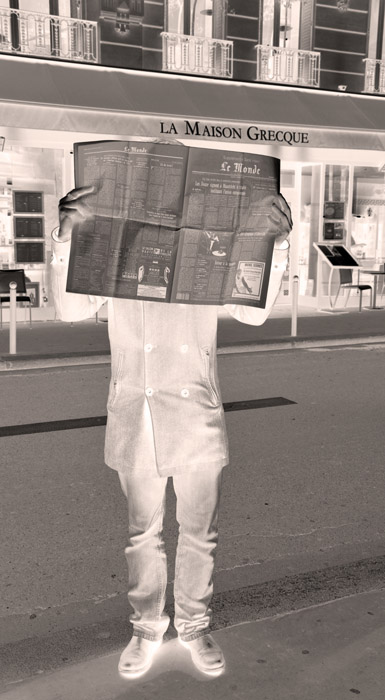
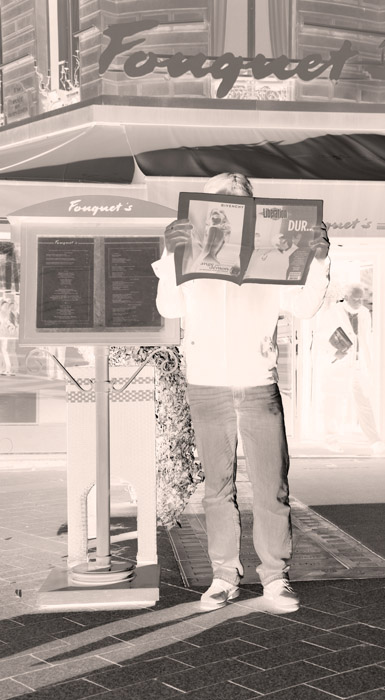
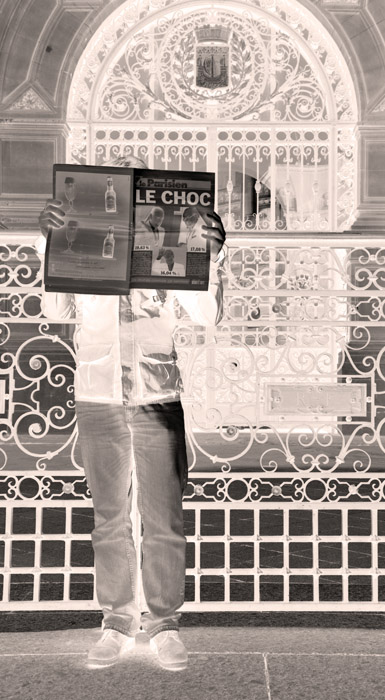
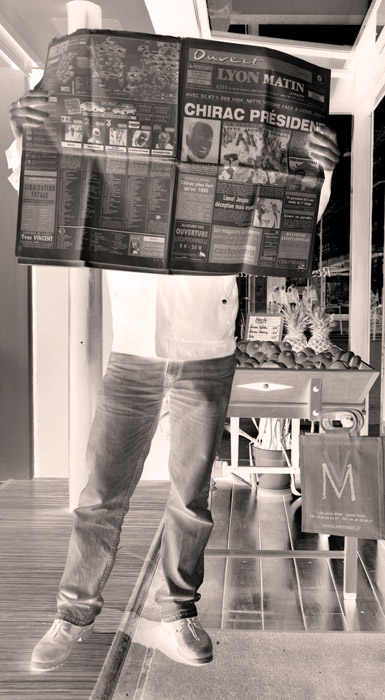
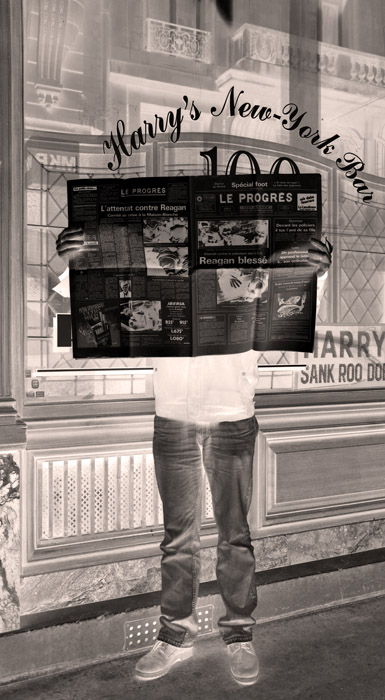
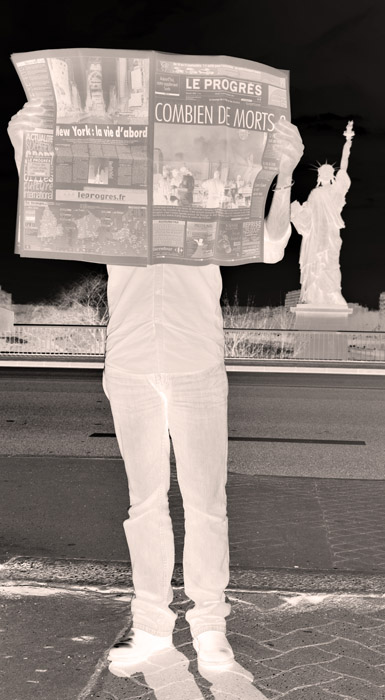
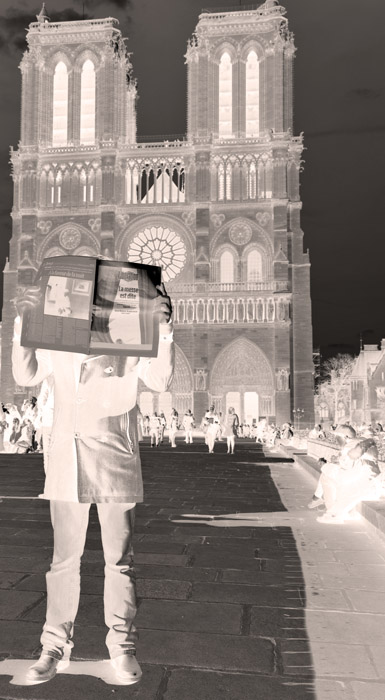
Cette série de Frédéric Bourret intitulée « J+1 » tente de capturer ce lien fondateur entre paroles médiatiques et société. L'épure du traitement en négatif, s'il est un parti-pris esthétique certain, agit également tel un révélateur permettant de décoder une réalité en perpétuelle devenir.
According to Aristotle, "Man is a political animal" and is naturally inclined to live in a community, which allows him to fulfill the ends of his nature. It is through discourse, which structures speech, ideas, the concepts of good and evil, just and unjust, and all moral notions, that man has succeeded in organizing his own feelings, thus making social life possible.
In our modern societies, the orchestration of discourse and the mediatization of world events have taken a central place. The media, acting as true sounding boards, play the role of transmitting information to the widest audience. Events, whether political or not, fuel the media machine, which in turn creates a new reality accessible to the common person. Thus, media and the real world feed off each other, respond to each other, and are in constant confrontation to give birth to a new interpretation of our daily lives.
Frédéric Bourret's series titled "J+1" attempts to capture this foundational connection between media discourse and society. The starkness of the negative treatment, while being a clear aesthetic choice, also functions as a revealer, allowing us to decode a reality in constant evolution.
亚里士多德说:「人是政治动物」,天性倾向于生活在城邦之中,这个社会整体使他得以实现其本性的目的。正是通过话语——构建言语、观念、善恶之分、正义与非正义以及一切道德概念——人类才得以组织自身情感,从而使社会生活成为可能。
在我们的现代社会中,话语的编排和世界事件的媒体化占据了核心位置。媒体作为真正的扩音器,扮演着向最广大公众传递信息的角色。无论政治与否,各种事件滋养着媒体机器,而媒体机器本身又创造了一种普通人可以接触到的新现实。就这样,媒体与真实世界相互滋养、相互回应、不断碰撞,催生出对我们日常生活的全新解读。
弗雷德里克·布雷的这个系列「J+1」试图捕捉媒体话语与社会之间的根本联系。负片处理的简洁,虽然是明确的美学选择,同时也起到了揭示者的作用,使我们得以解读不断演变的现实。